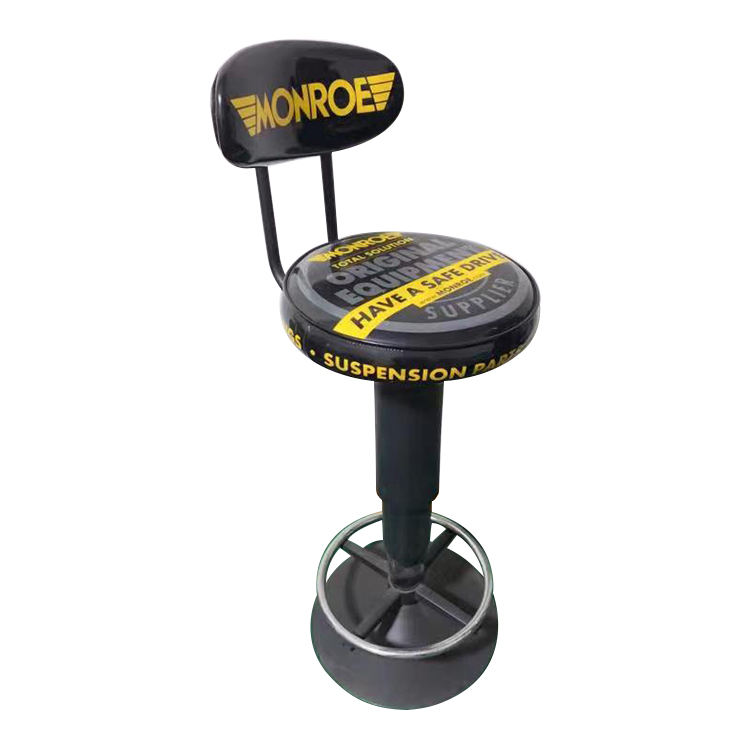
Commercial Bar Stools are no longer selected only for their appearance. For restaurants, cafés, hotels, bars, and other hospitality projects, seating needs to complement the interior concept while fitting into daily cleaning routines and frequent customer turnover. As commercial spaces place greater emphasis on practical operation and consistent visual presentation, procurement teams are looking more closely at materials, construction, maintenance, and customization before placing bulk furniture orders.
A bar stool can look appealing in a showroom, but its suitability becomes clearer after months of everyday use. Food particles, beverage spills, dust, cleaning products, and constant contact can gradually affect surfaces and upholstery. For restaurants and cafés, furniture that is straightforward to inspect and clean can reduce unnecessary maintenance work.
When developing commercial seating, manufacturers need to consider the complete usage environment rather than focusing on appearance alone. Surface finish, upholstery, frame structure, and cleaning requirements should be evaluated together. This approach helps buyers avoid selecting a design that looks attractive initially but creates additional maintenance challenges after installation.
Material selection has a direct influence on how easily seating can be maintained. Restaurants may need to wipe stools regularly, particularly around counters, dining areas, and beverage stations. Smooth surfaces can simplify routine cleaning, while complicated textures, exposed seams, or unsuitable upholstery may require additional attention.
When evaluating easy-to-clean commercial bar stools, procurement teams can compare:
The appropriate combination depends on the project. A café, hotel lounge, and busy bar may have different requirements, so material selection should follow actual operating conditions.
Maintenance is also closely connected to product construction. Complicated joints, exposed gaps, and unnecessary recessed details can provide additional areas for dust or residue to collect. A well-planned structure can make inspection and cleaning more convenient while preserving the intended appearance.
From a manufacturing standpoint, design-for-manufacturing plays an important role here. By reviewing the frame, seat structure, fasteners, upholstery, and finishing process as one system, potential production and maintenance concerns can be identified earlier. This also helps create a repeatable process when supplying commercial bar stools for larger hospitality projects.
Easy maintenance does not mean commercial seating needs to look ordinary. Hospitality interiors continue to explore curved silhouettes, warm finishes, mixed materials, and distinctive seating details. The challenge is finding the right balance between visual identity and practical operation.
For example, a modern café may require a softer upholstery combination, while a busy bar may prioritize surfaces that can be cleaned efficiently. As a manufacturer, we can adapt colors, upholstery, frame finishes, seat shapes, and other design details according to project specifications, allowing buyers to maintain a consistent furniture style across different locations.
Before confirming a bulk order, purchasing teams should look beyond product photographs and request practical information from suppliers. A sample evaluation can provide useful insight into construction, finishing, material feel, and overall workmanship.
Important questions may include:
These questions allow buyers to evaluate suppliers based on manufacturing capability as well as appearance.
For OEM and project-based furniture orders, early communication can prevent avoidable production problems. Manufacturers can review drawings, material combinations, finishing requirements, packaging conditions, and assembly details before full production begins.
This becomes especially useful when a buyer is developing a private-label furniture collection or supplying multiple hospitality locations. Clear specifications give the factory a practical basis for converting a design concept into a repeatable production process while maintaining consistent construction and appearance throughout the order.
For hospitality buyers, suitable furniture needs to perform well beyond the showroom. It should fit cleaning routines, operating conditions, interior requirements, and future replacement considerations. By addressing these factors during product development, manufacturers can create Commercial Bar Stools that are practical for restaurants, cafés, hotels, and bars while still supporting a distinctive interior concept. For buyers looking for easy-to-maintain commercial bar stools, working directly with an experienced manufacturer can help turn specific project requirements into a practical and scalable seating solution.

Wuyi Qixing Machinery Technology Co., Ltd. is committed to providing high-quality, durable and environmentally friendly products for outdoor leisure and entertainment venues.
Further negotiation?
We are glad to hear from you.
* We promise never to disclose your privacy.

Building 3-4#, Wangzhai Village, Jiangnan Industrial District. Wangzhai Town, Wuyi, Jinhua City, Zhejiang, China.

+86-13967960360
+86-15258989007


© 2023 Wuyi Qixing Machinery Technology Co., Ltd.
Outdoor Leisure Products




 中文简体
中文简体 西班牙语
西班牙语 阿拉伯语
阿拉伯语
Contact Us