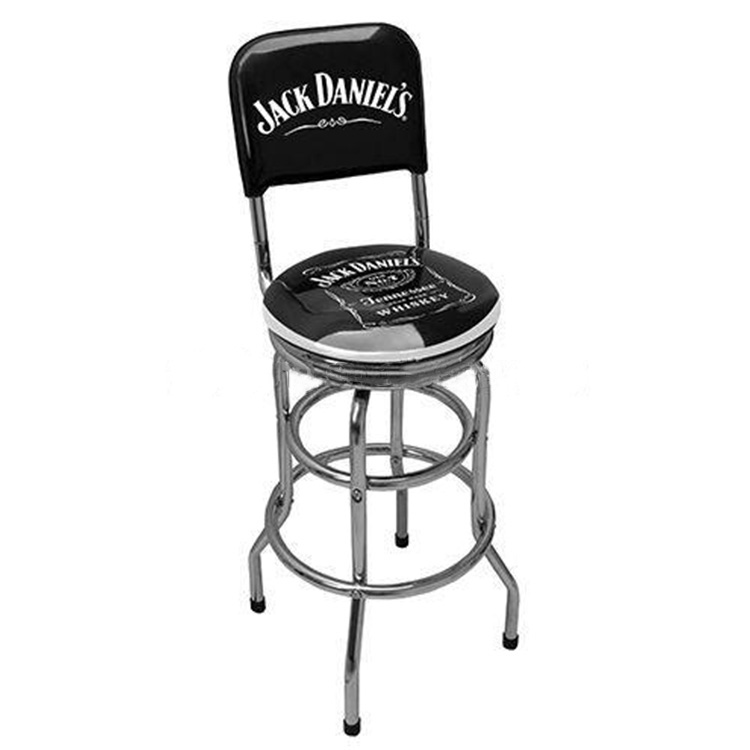
Commercial Bar Stools are playing a more flexible role in modern restaurants, cafés, hotel lounges, and hospitality venues. Instead of treating bar seating as a separate area, many operators are integrating high seating into different parts of the floor plan to accommodate quick dining, social gatherings, waiting areas, and casual work. For procurement teams, the challenge is not simply finding attractive stools, but selecting seating that works efficiently with the available space and the way guests and staff move through the venue.
Before choosing a stool, buyers should consider how the surrounding area actually functions. A counter near the entrance may serve waiting guests during busy periods, while a bar-height table in another part of the restaurant may be used for longer meals. These different scenarios can influence seat height, stool dimensions, backrest design, and spacing.
Instead of asking only how many stools can fit into an area, project teams should consider whether guests can sit, stand, and move around comfortably without interfering with staff circulation. This creates a more practical foundation for selecting commercial seating.
Restaurants are increasingly designed to support more than one type of customer experience. Bar seating can help divide an open floor plan into functional zones without requiring permanent walls or large architectural changes. Current restaurant design guidance also highlights flexible layouts and increased use of counter and bar seating.
A well-positioned group of stools can serve several purposes:
This makes bar stools particularly useful for projects where every part of the floor needs to support more than one function.
A common sourcing mistake is selecting the stool and trying to adapt the surrounding layout afterward. The relationship between stool dimensions, counter height, table depth, aisle width, and nearby furniture should be considered as a complete system.
For manufacturers, this means understanding the project rather than supplying a product based solely on a catalog photograph. When buyers provide drawings or layout information, the factory can better understand the intended application and recommend suitable configurations or customization options.
A restaurant may feel spacious when empty but operate very differently during lunch, dinner, or weekend service. Staff need clear routes for carrying food and drinks, while guests need enough room to pull out stools and move between seating areas.
Furniture selection should therefore consider movement around the stool as well as the stool itself. A compact frame may work better in one project, while another may benefit from a more substantial design that creates a stronger visual boundary between seating zones.
The goal is to support the operating pattern of the venue rather than simply maximize the number of seats.
Flexibility has become increasingly relevant as restaurants and hospitality spaces serve different purposes throughout the day. Industry design discussions are highlighting layouts that can shift between dining, events, social use, and other functions.
For buyers, this can influence the choice between fixed and movable seating. Depending on the project, features such as manageable weight, stable construction, stackability, or adaptable configurations may make it easier to reorganize a space when requirements change.
Bar stools rarely work alone. Their visual and physical relationship with tables, counters, chairs, booths, lighting, and other furniture can determine whether the finished space feels coordinated.
Manufacturers can support this process by offering compatible finishes, upholstery options, colors, and structural details across related seating products. For restaurant groups and furniture distributors, this can also make it easier to develop a consistent furniture specification for multiple locations.
The commercial seating strategy is not necessarily the one that places the high number of stools into a room. It is the one that allows the available space to work efficiently while supporting guest movement, staff operations, visual identity, and future changes.
As a manufacturer, we work with buyers to translate project layouts and design requirements into practical seating solutions, including customized dimensions, materials, finishes, and configurations. For restaurants, cafés, hotels, and commercial furniture distributors, carefully specified Commercial Bar Stools can help create flexible seating areas that make better use of valuable floor space without making the environment feel unnecessarily crowded.

Wuyi Qixing Machinery Technology Co., Ltd. is committed to providing high-quality, durable and environmentally friendly products for outdoor leisure and entertainment venues.
Further negotiation?
We are glad to hear from you.
* We promise never to disclose your privacy.

Building 3-4#, Wangzhai Village, Jiangnan Industrial District. Wangzhai Town, Wuyi, Jinhua City, Zhejiang, China.

+86-13967960360
+86-15258989007


© 2023 Wuyi Qixing Machinery Technology Co., Ltd.
Outdoor Leisure Products




 中文简体
中文简体 西班牙语
西班牙语 阿拉伯语
阿拉伯语
Contact Us