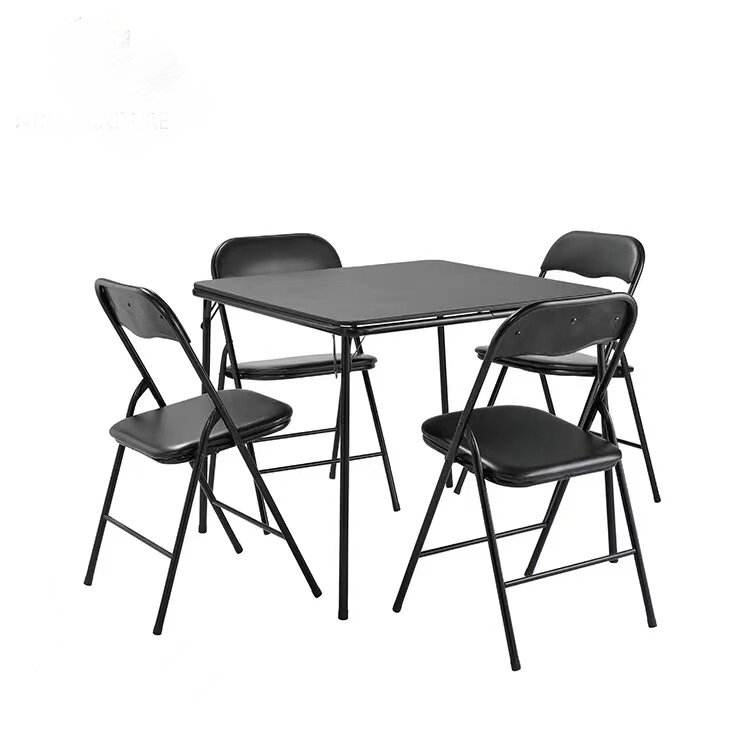
Flexible event spaces are placing more attention on furniture that can be moved, stored, reused, and arranged for different activities. Folding furniture is used across conferences, training rooms, hotels, community venues, exhibitions, weddings, and rental operations, where setup time and storage can directly affect daily operations. Recent industry discussions also show growing interest in reusable event furniture and adaptable layouts rather than single-purpose products. For distributors and commercial buyers, choosing Wholesale Folding Table And Chair products should therefore involve more than comparing unit prices.
The same folding table or chair may perform differently depending on how it will be used. A hotel banquet area may prioritize appearance and guest comfort, while a training center may need easy room reconfiguration and compact storage.
Before requesting quotations, buyers should identify the main application, expected frequency of setup, available storage area, indoor or outdoor conditions, and transportation requirements. This gives manufacturers a clearer basis for recommending suitable structures and finishes instead of supplying a generic product range.
For folding furniture, the mechanism underneath the visible surface deserves careful attention. Hinges, folding legs, locking points, frame joints, and foot components all contribute to how the product performs during repeated handling.
For tables, buyers can examine:
For chairs, frame joints, folding mechanisms, seat construction, back support, and protective feet should receive similar attention. A product intended for commercial use needs to remain practical during frequent setup, folding, transportation, and storage.
A folding design only creates value when the furniture can actually be stored efficiently. Commercial venues often need to move tables and chairs through doors, corridors, elevators, or loading areas before placing them in storage.
Buyers should measure the complete handling route rather than considering storage space alone. Folded dimensions, stacking height, product weight, and compatibility with transport carts can all influence how easily staff can manage the furniture.
For larger projects, planning the storage and movement process at the purchasing stage can prevent a situation where furniture fits the room but becomes difficult to handle after an event.
Lightweight furniture is easier to move, but reducing weight should not compromise the stability required for the intended application. This is particularly relevant for conference rooms, banquet spaces, rental businesses, and venues where furniture is repeatedly repositioned.
Manufacturers should consider the relationship between frame structure, tabletop or seat materials, leg geometry, locking components, and overall weight distribution. Buyers can also request samples to assess folding action and stability before committing to a larger order.
Commercial furniture needs to work for both the operator and the end user. Staff may value easy handling and storage, while guests may pay more attention to seat comfort, surface finish, proportions, and overall appearance.
This is particularly relevant for venues that use the same furniture across different events. A coordinated folding table and chair range can support conference layouts, dining arrangements, community activities, and temporary event spaces without requiring completely different furniture for every occasion. Current commercial furniture suppliers are also offering folding and modular products aimed at hotels, events, and rental businesses.
Repeated cleaning is part of everyday commercial furniture use. Table surfaces and chair materials should be appropriate for the expected environment and routine maintenance process.
Buyers should ask suppliers about surface finishes, frame treatments, cleaning requirements, and replacement components. For outdoor or occasionally outdoor applications, environmental exposure should also be discussed before material selection.
A manufacturer's ability to explain these details is often more useful than simply providing a catalogue photograph.
When comparing overseas suppliers, a clear specification can make quotations easier to evaluate. Instead of asking only for a price, procurement teams can provide:
This allows the manufacturer to evaluate the project from a production perspective and identify potential issues before mass production.
For distributors, hospitality companies, event rental businesses, and institutional buyers, the value of Wholesale Folding Table And Chair products extends beyond the initial shipment. Manufacturing consistency, structural design, finish quality, packaging, replacement support, and communication during repeat orders can all influence long-term procurement efficiency. A supplier that understands how folding furniture is transported, assembled, stored, cleaned, and reused can provide a more practical foundation for building a commercial furniture range.

Wuyi Qixing Machinery Technology Co., Ltd. is committed to providing high-quality, durable and environmentally friendly products for outdoor leisure and entertainment venues.
Further negotiation?
We are glad to hear from you.
* We promise never to disclose your privacy.

Building 3-4#, Wangzhai Village, Jiangnan Industrial District. Wangzhai Town, Wuyi, Jinhua City, Zhejiang, China.

+86-13967960360
+86-15258989007


© 2023 Wuyi Qixing Machinery Technology Co., Ltd.
Outdoor Leisure Products




 中文简体
中文简体 西班牙语
西班牙语 阿拉伯语
阿拉伯语

Contact Us