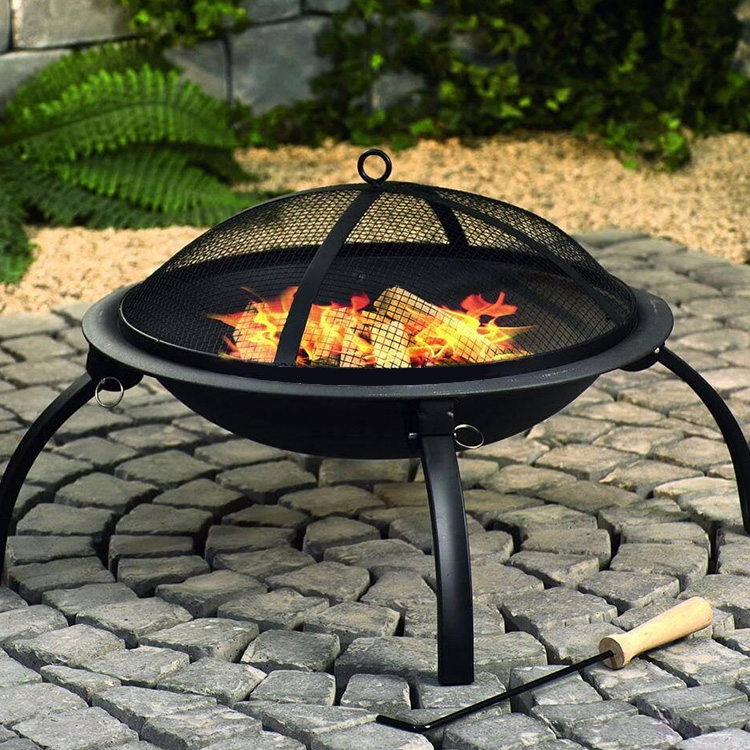
Choosing the Correct location for an outdoor cooking fire pit is one of the more important decisions before starting any backyard cooking or gathering. Users of grillz fire pit products often want to know how far their fire pit should be from a house, what type of surface is safe, and how to avoid unnecessary risks during cooking. With many years of product development experience, Wuyi Qixing Machinery Technology Co., Ltd. understands how much the setup environment influences fire pit performance and user satisfaction.
1. Distance and Clearance: How Far Is Considered Safe?
One of the more common questions users ask is how far a fire pit should be placed from structures. While different regions may have local recommendations, there are general principles that apply in more environments.
Suggested Clearance
Keep at least 10–15 feet (3–5 meters) between the fire pit and any structure.
Stay clear of low-hanging tree branches, roof edges, and outdoor décor.
Ensure the area around the fire pit has open airflow.
Why Clearance Matters
A fire pit generates rising heat and sparks depending on fuel type. When a grillz fire pit is used for active cooking, the heat can increase significantly, especially when flames rise high.
2. Choosing the Correct Ground Surface
The surface beneath a fire pit affects safety, heat control, and long-term durability. Many users wonder whether they can place their fire pit on grass, decks, gravel, or stone.
Recommended Surfaces
Surfaces to Avoid
Why Surface Matters
Certain surfaces absorb heat better, preventing structural damage. For example, stone and gravel surfaces distribute heat safely, while wood and composite decks can be affected by rising temperatures or falling embers.
3. Wind Direction and Ventilation Considerations
Before placing a fire pit, evaluating wind direction is essential. Many users forget that wind controls smoke flow, flame movement, and cooking performance.
Key Tips
Avoid installing the fire pit in narrow pathways where wind tunnels form.
Position seating so smoke does not blow directly toward guests.
Keep surrounding items like umbrellas, cloth covers, and lightweight furniture away from the wind-facing side of the pit.
Outdoor cooking works nicely when smoke naturally rises and disperses rather than blowing horizontally.
4. Surface Level and Stability
A fire pit must always sit on a flat and stable surface. Uneven ground increases spill risk, affects cooking balance, and can even cause the fire pit to tilt when loaded with cookware or wood.
What Users Should Do
Check the ground with a simple level tool or by visually aligning the base.
Avoid placing a fire pit on sloped lawns or unstable soil.
Consider adding a flat stone or gravel foundation for uneven backyard terrain.
Proper leveling helps ensure safety while enhancing cooking efficiency.
5. Surrounding Space for Cooking and Movement
A well-placed outdoor cooking fire pit requires enough space for movement, grilling accessories, and safe interaction.
Recommended Layout
Leave at least 3 feet of open space around the entire fire pit.
Arrange chairs in a semi-circle, not blocking escape paths.
Keep children and pets at least 5 feet away from the fire pit during use.
Ensure you can rotate cookware and adjust grill height without leaning over flames.
6. Avoid Enclosed Areas or Limited Ventilation Zones
Some users ask whether they can place a fire pit inside a covered patio or gazebo. The answer is generally no, because fire pits require proper ventilation to disperse heat and smoke safely.
Avoid placing fire pits in:
Small enclosed patios
Tents or enclosed gazebos
Under low rooflines
Inside garages or sheds
A fire pit must always operate in an open-air environment to ensure proper oxygen flow and safe smoke ventilation.

Wuyi Qixing Machinery Technology Co., Ltd. is committed to providing high-quality, durable and environmentally friendly products for outdoor leisure and entertainment venues.
Further negotiation?
We are glad to hear from you.
* We promise never to disclose your privacy.

Building 3-4#, Wangzhai Village, Jiangnan Industrial District. Wangzhai Town, Wuyi, Jinhua City, Zhejiang, China.

+86-13967960360
+86-15258989007


© 2023 Wuyi Qixing Machinery Technology Co., Ltd.
Outdoor Leisure Products




 中文简体
中文简体 西班牙语
西班牙语 阿拉伯语
阿拉伯语


Contact Us